
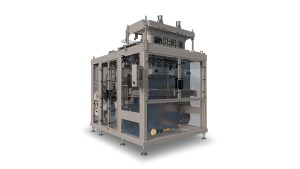
Stick packing is a vertical form fill seal (VFFS) process. A single reel of film is unwound, split into as many ribbons as the machine has lanes, and drawn over forming tubes that shape each ribbon into a continuous sleeve. A vertical seal closes the length of the sleeve; the doser drops a measured shot of product into it, and a horizontal sealing bar closes the top of one stick and the bottom of the next before a blade separates them.
Every machine in the range is built around an industrial PC with touch-screen control and servo-driven motion, so settings are stored per product and recall is a menu selection rather than a manual reset.
Six models cover the range from low-volume production up to continuous high-output lines. All of them run on 220, 400 or 440 V AC three-phase supply at 50 or 60 Hz and need compressed air at 6 bar.
The PH models are the enclosed-cabinet versions, built to suit pharmaceutical and nutraceutical production where the film path needs protecting from the surrounding environment and documentation requirements are stricter.
Stick Pack Packaging Machine | BY3 EVO
Stick Pack Packaging Machine | PH6 Ultraclean
Stick Pack Packaging Machine | SP6 Coffee Packaging
Lane count is the main lever on output. Every extra lane divides the same reel into narrower ribbons. An SP12 running six lanes will give you a 90mm stick; the same machine at twenty lanes gives you 17mm and three times the throughput.
The ILPRA UK team will work with you to decide the dose, the stick width your product and branding need, and the fill weight, then work backwards to the lane count that delivers your target volume. If your figures land between two models it is usually worth taking the larger frame with fewer lanes fitted.
Stick length runs from 60mm up to 160mm as standard, with 200mm available where the application calls for it.
Beyond a plain straight cut, sticks can be produced with laser scoring, rounded corners, a diamond profile, vertical, inclined or V-shaped tear notches, and fully custom shapes. Twin-pack configurations let you run two products side by side in a joined pair, and child-resistant formats are available where the contents require them.
Coding is integrated into the machine rather than bolted on afterwards, with laser, inkjet and thermal transfer overprinting all supported, so batch and date marking happens in line at full speed.
A stick pack line consumes considerably more film than most other packaging formats. Film becomes the running cost that decides whether the line is profitable, and a machine that has been specified without reference to the film it will run is a machine that will give you sealing problems.
We supply both. Stick pack film is available from us from the day the machine is commissioned, in structures matched to your product’s barrier and shelf-life requirements, including paper-based, multilayer, aluminium-barrier and recyclable options. Because we specify the machine and the material together, seal integrity and machinability are settled before installation rather than diagnosed afterwards.
Most projects start with the machine and its dedicated product loading system, which is what governs whether the doser is fed consistently enough to hold fill accuracy at speed. That is the minimum viable line and it is where the majority of installations begin.
From there the line can grow. Transfer systems move finished sticks away from the outfeed, in-line checkweighing and vision inspection handle quality control, and end of line packaging equipment collates sticks into retail packs. None of it has to be bought at once. The machines are designed to integrate with secondary packaging equipment, so cartoning and automation can be added later without replacing what is already installed.
Machines are installed and commissioned by our engineers in Swindon, with operator and maintenance training delivered on site as part of the handover. Servicing and maintenance, breakdown callouts and spare parts are handled from the UK, so a fault does not mean waiting on a European service visit. We cover the wider picture in our guide to reducing downtime on automated lines.
BY3 EVO
1 - 8
320 mm
17 - 140 mm
60 - 160 mm (200 max)
480 sticks/min
1044 x 1435 x 1730
670 kg
SP6
4 - 15
640 mm
17 - 70 mm
60 - 160 mm (200 max)
900 sticks/min
1800 x 2370 x 2125
2100 kg
SP9
6 - 20
920 mm
17 - 70 mm
60 - 160 mm (200 max)
1200 sticks/min
2100 x 2530 x 2140
2500 kg
SP12
6 - 20
1220 mm
17 - 90 mm
60 - 160 mm (200 max)
1800 sticks/min
2450 x 2700 x 2150
3600 kg
PH6
4 - 15
640 mm
17 - 70 mm
60 - 160 mm (200 max)
900 sticks/min
1900 x 3050 x 2150
2850 kg
PH9
6 - 20
920
17 - 70 mm
60 - 160 mm (200 max)
1200 sticks/min
2100 x 2530 x 2140
2800 kg
Model: BY3 EVO
Model: SP6
Model: SP9
Model: SP12
Model: PH6
Model: PH9
FAQS
Stick Pack Frequently Asked Questions
Output depends on lane count more than anything else. A single-lane machine produces around 60 sticks a minute; a twenty-lane system reaches 1800. Actual sustained rates also depend on the product being dosed, the fill weight and the film structure, so the figures in the table are maximum machine speeds rather than a guarantee for every application.
A stick is sealed on three sides and formed by folding a single ribbon of film into a tube, giving a narrow cylindrical pack. A sachet is sealed on four sides and made from two film faces, giving a flat rectangular pack with a larger printed area. Sticks use around a third less film for the same dose, though dose volume, pack width and film structure all move that figure, so it is worth reading how stick packs and sachets compare before settling on a format.
Yes, within limits. Changing stick length is a setting on the touch screen. Changing width means changing the forming tubes and cutting arrangement, which is a physical changeover rather than a recipe change, and the reel width has to suit. If you are planning several formats it is worth listing all of them at specification stage so the machine is built for the full set.
Reel film in structures suited to stick forming, in widths up to 1220mm depending on the model, with a maximum reel diameter of 600mm on the larger frames and 400mm on the BY3 EVO. We supply film alongside the machine and can advise on barrier structure, sealant layer and recyclable options for your product.
Footprints run from roughly 1.0 by 1.4 metres for the BY3 EVO up to 2.5 by 2.7 metres for the SP12, before allowing for operator access, film reel handling and outfeed equipment. We will produce a layout for your building as part of the quotation.
Either. Some customers take the machine and loading system only and run into existing downstream equipment. Others build the full line including transfer, weighing, inspection and cartoning. The equipment is designed so that later additions integrate with what is already installed.
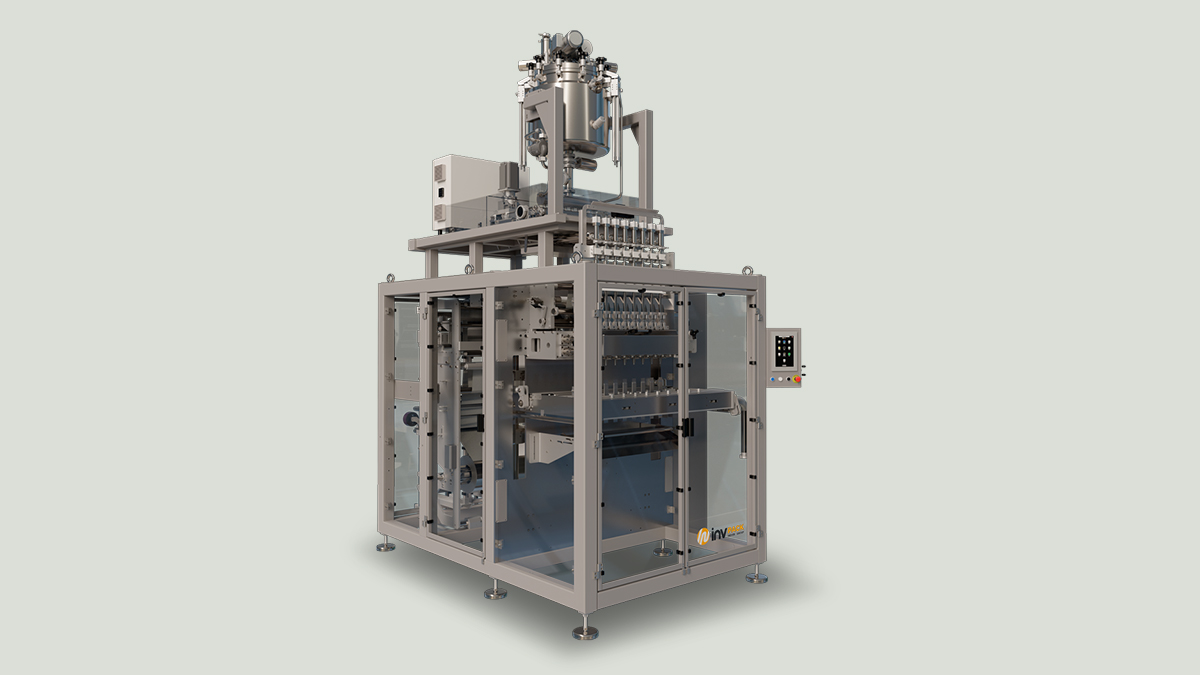
Model no: SP9
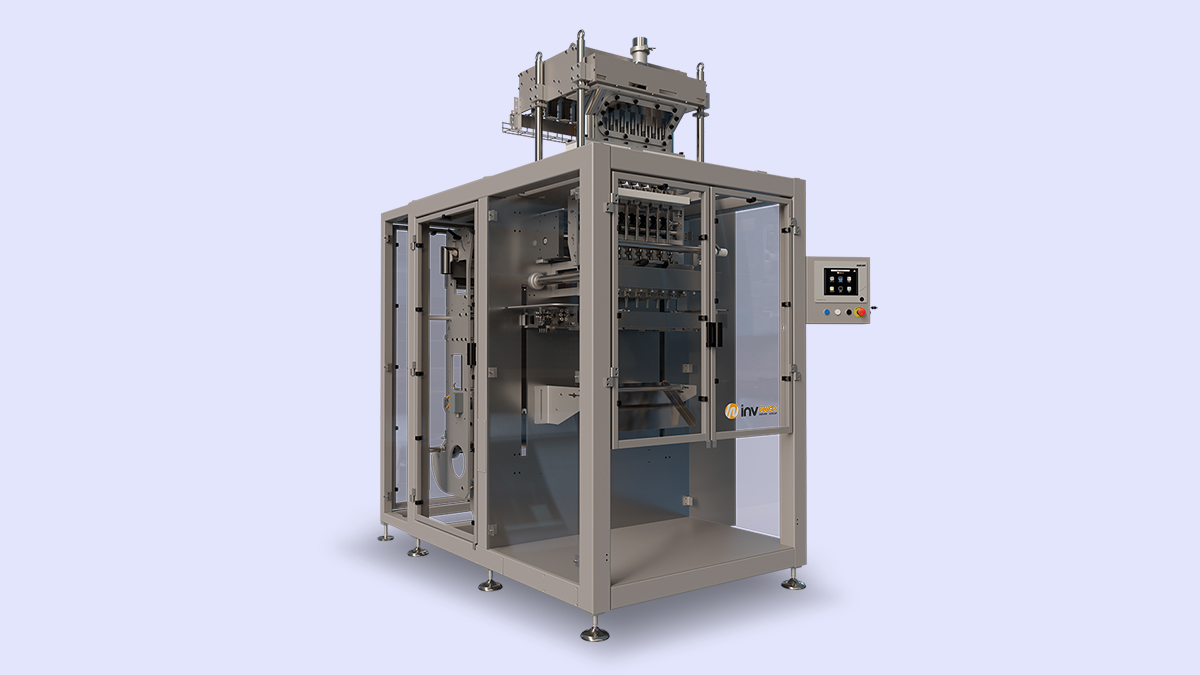
Model no: SP6
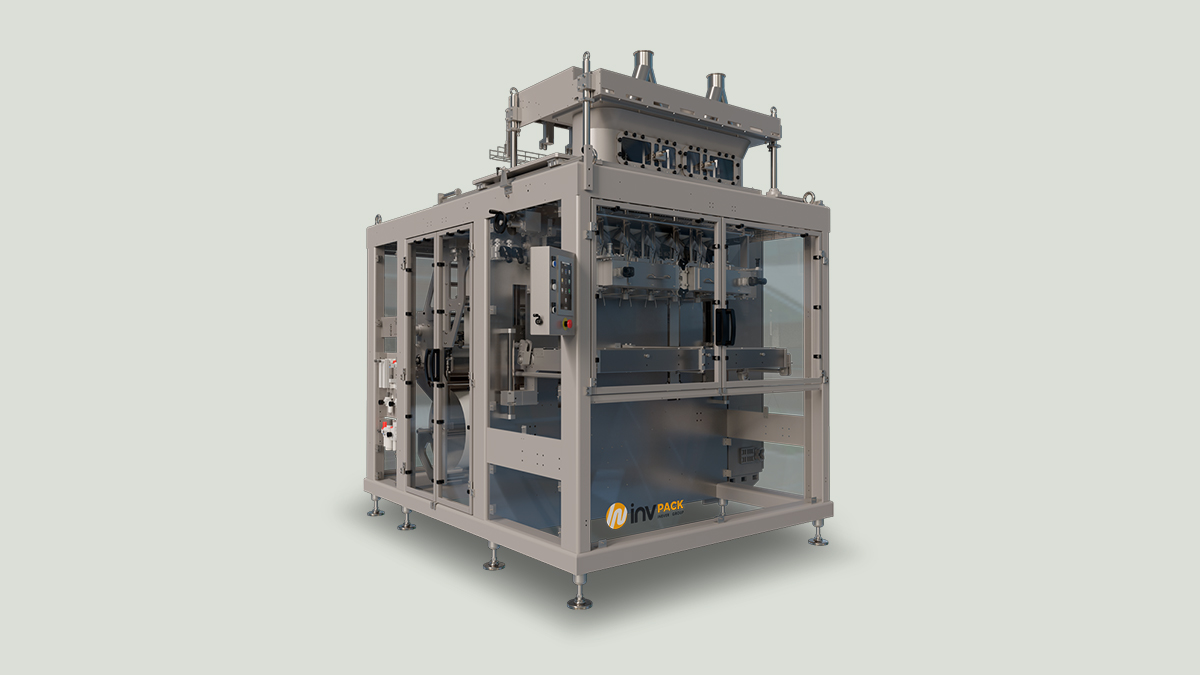
Model no: SP12
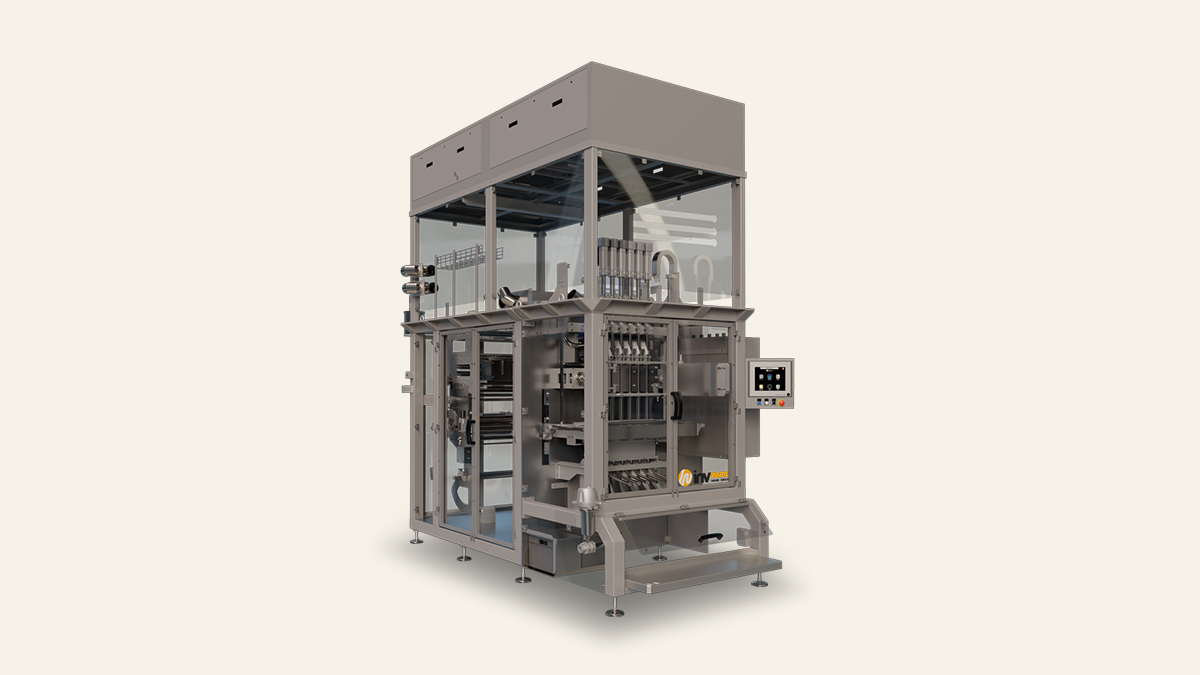
Model no: PH6
Model no: SP9
Model no: SP6
Model no: SP12
Model no: PH6
Get in touch here with our team to request a free quote. Our expert team will help you configure the best solution for your production line.
Get in touch with our team for tailored advice on which packaging solution is right for your products.