Technology29 May 2026
Choosing the right dosing system for fill seal
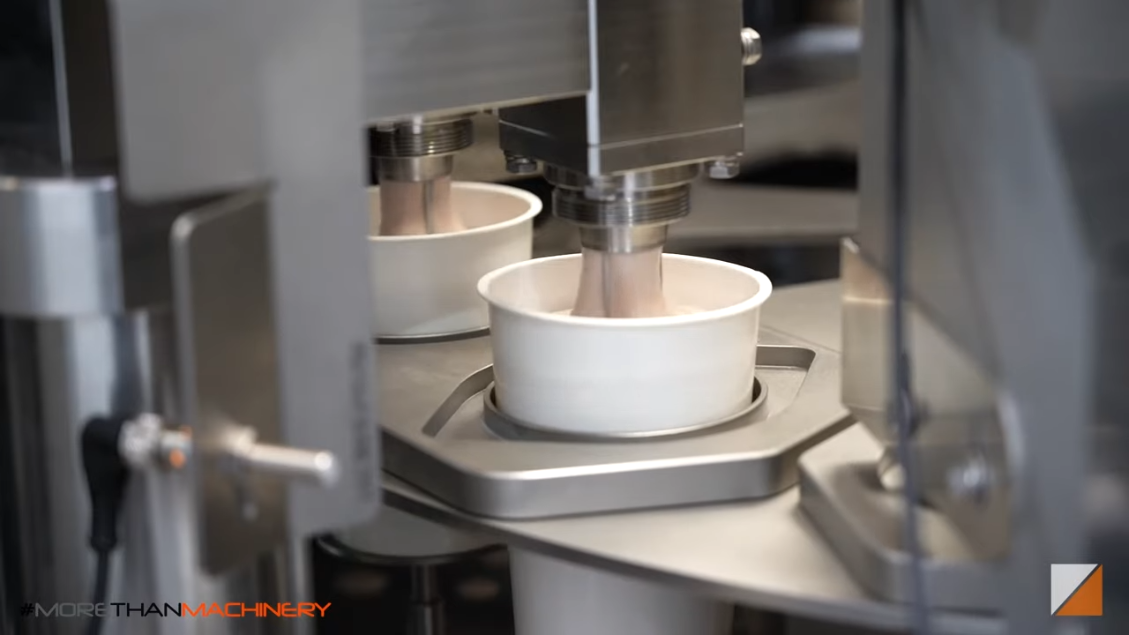
The dosing system fitted to a fill seal machine has a direct effect on fill accuracy, product quality and line efficiency. Choosing the right approach depends on how the product behaves, what fill accuracy is required, and how the machine needs to perform within the wider line.
Why dosing system selection matters
All fill seal machines dispense a defined quantity of product into each container, but the mechanism used to control that quantity varies depending on product type and the precision required. An incorrectly specified dosing system can lead to inconsistent fill weights, product giveaway, underfilled containers, product wastage during changeover and increased maintenance demands.
Getting the dosing system right from the outset protects product quality, supports fill accuracy compliance and keeps the line running efficiently.
Volumetric dosing
Volumetric dosing dispenses a fixed volume of product per cycle, typically using a piston that draws in and expels a measured quantity of product on each stroke.
This approach works well for products with consistent density and flow characteristics, where volume is a reliable proxy for fill weight. It is commonly used for liquid and semi-liquid products including sauces, dressings, dairy liquids and similar products that flow predictably at operating temperature.
Volumetric systems are generally straightforward to set up and maintain, and they can operate at high speeds where the product allows. The limitation is that any variation in product density or viscosity between batches will affect the actual fill weight even if the dispensed volume remains constant. For products where weight variation is a compliance risk, an additional weight verification step at the line may be needed.
Weight-controlled dosing
Weight-controlled dosing systems dispense product and check the fill weight during or after the filling stage, adjusting the dose in response to the measured result. This closes the tolerance band compared to volumetric systems and is appropriate where fill weight accuracy is a regulatory or commercial requirement.
This approach is often used for products with variable density or flow behaviour, for higher-value products where giveaway represents a meaningful cost, or where retailer or regulatory requirements specify a tight declared weight tolerance.
The trade-off is that weight-controlled systems are generally more complex and may operate at lower speeds than purely volumetric systems, depending on the weighing technology and the container format. The right balance between accuracy and speed depends on the specific production requirement.
Piston and auger dosing for viscous and particulate products
For thicker, more viscous products such as cream cheese, hummus, thick sauces or products with suspended solids, piston-based dosing provides controlled dispensing that suits the product’s flow behaviour. The piston mechanism pushes product through a nozzle rather than relying on gravity or pump pressure alone, which gives more consistent results with products that do not flow freely.
Auger dosing is used for powder or granular products in fill seal applications, where a rotating screw mechanism controls the dispensed quantity. This suits dry products that would not flow reliably through a volumetric liquid system.
The choice between these approaches depends on product texture and flow behaviour. For products that sit in the boundary between liquid and solid, such as custard, thick soups or chunky sauces, the dosing system needs to be matched carefully to avoid inconsistent fills or product damage during dispensing.
Multi-head dosing
Multi-head dosing is used where more than one product component needs to be dispensed into each container. A yoghurt with a fruit layer, a dip with a separate sauce, or a dairy dessert with a topping are all examples where two or more fills are needed per container in a defined sequence.
Multi-head systems dispense each component separately, typically in separate stations around the carousel on a rotary machine or in sequential inline stations. The timing, volume and sequence of each fill is controlled by the machine recipe.
This approach adds complexity to the machine setup and changeover process, so it is most appropriate where the product range regularly uses multi-component formats and the output volume justifies the investment in the additional filling infrastructure.
Matching the dosing system to the product and line
The right dosing system is determined by a combination of product characteristics, required fill accuracy, output speed and the operational context of the line. The key questions to work through are:
- Does the product flow freely, or does it need mechanical assistance to dispense consistently?
- Is fill weight controlled by volume or by actual weight verification?
- How tight is the declared weight tolerance and what are the consequences of variation?
- Does the container need more than one product component per fill?
- What is the required line speed and how does that interact with the dosing method?
Get in touch
We can advise on the dosing system configuration that best fits the product and production requirement. Speak to the team to discuss your application.