Technology8 May 2026
The hidden costs of manual packaging in high-volume production
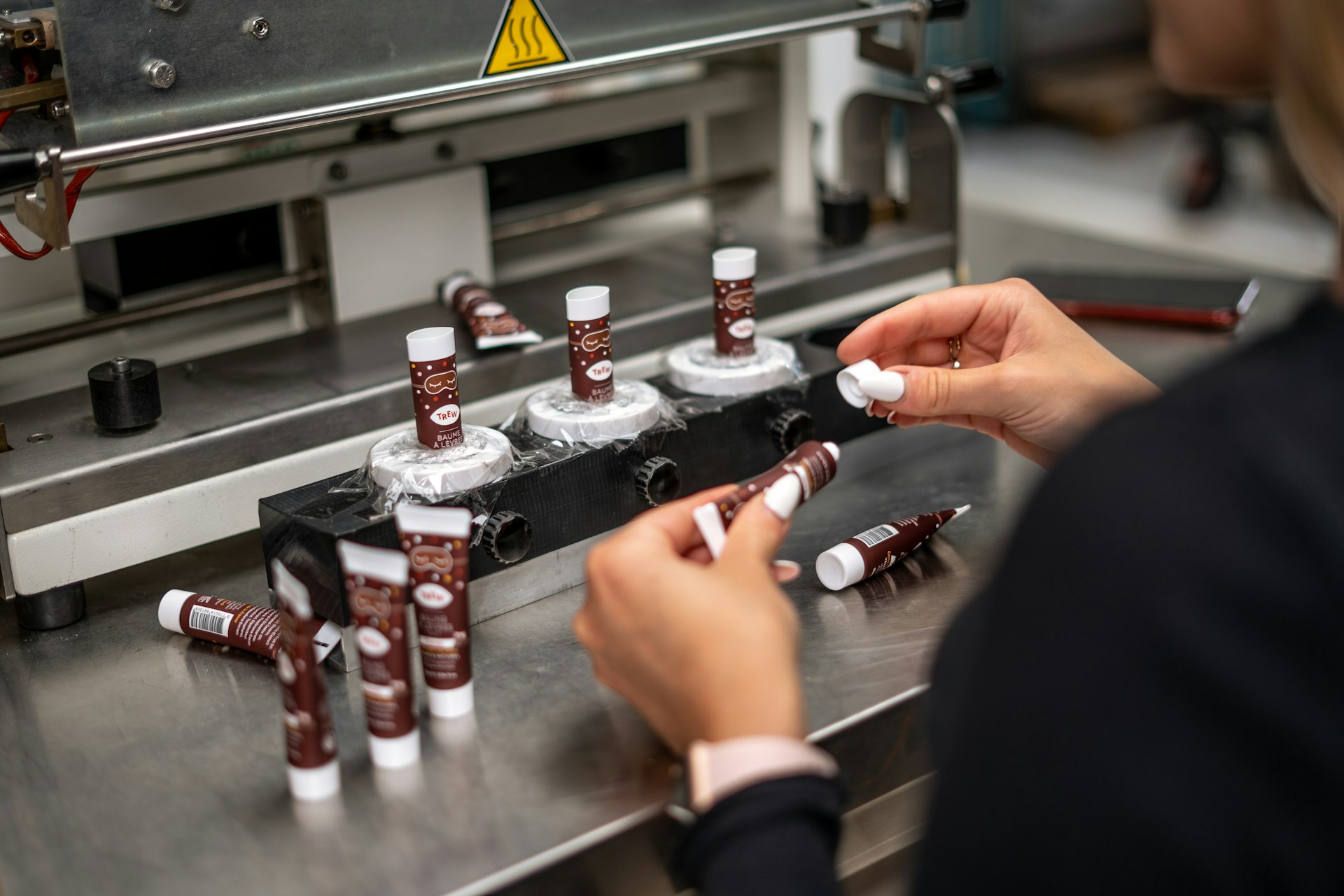
Manual or semi-automated packaging can feel like a manageable solution when volumes are moderate, or growth is still being established. But as output scales, the real costs of relying on manual processes become harder to ignore.
This is not just about wage bills. Labour inefficiency, product inconsistency, waste, quality failures and line bottlenecks all carry financial weight that rarely appears clearly on a single line of a cost report. For high-volume manufacturers, understanding these costs in full is often what makes the case for investing in automated packaging machinery.
Labour costs go beyond headcount
The most visible cost of manual packaging is the number of people it requires. But the true labour cost runs deeper than the wage line.
Manual packing stations require supervision, training, welfare provision and management time. Sickness, turnover and peak season shortfalls all affect throughput in ways that are difficult to plan for. Each operator adds a point of variability to the line, and when packing speeds depend on individual performance, consistent output targets become harder to hit.
Labour costs in manual packaging environments also tend to scale with output in a way that automated systems do not. As volume increases, headcount typically rises alongside it. Automated packaging equipment, by contrast, can often deliver higher throughput with a more stable operational cost base, particularly once the machinery is correctly specified and integrated into the line.
Product inconsistency and quality failures
Manual packing introduces variation that automated systems are specifically designed to reduce. Portion weights, seal quality, pack presentation and fill accuracy are all subject to human variability when the process depends on operator judgement rather than machine control.
For manufacturers, the consequences can be significant. Underweight packs create compliance exposure. Overweight packs increase giveaway and reduce margin. Poor seals can lead to product spoilage, returns or retailer rejection. Inconsistent presentation affects brand quality and can damage retailer relationships where pack standards are defined contractually.
Automated packaging machinery addresses these risks by maintaining consistent fill weights, controlled seal parameters and repeatable pack formation across every cycle. The result is tighter quality control with less reliance on end-of-line inspection to catch failures that should not have occurred at the packing stage.
Waste and giveaway
Product giveaway is one of the most underestimated costs in manual packing operations. When fill weights are controlled by hand rather than by a calibrated dosing system, the tolerance band tends to be wider than necessary. Operators typically pack slightly heavy to avoid underweight failures, and across thousands of packs, that giveaway adds up.
The same applies to packaging material waste. Manual processes often generate higher levels of mis-sealed packs, damaged film and rejected trays than automated lines running at the correct specification. Each of these represents direct material cost with no recoverable value.
A well-specified automated line, whether tray sealing, fill sealing, thermoforming or flexible packaging, reduces both forms of waste by controlling dosing accuracy and sealing consistency at machine speed.
Throughput limits and bottlenecks
Manual packaging creates a ceiling on output that is determined by operator speed rather than production capacity. When upstream processes can supply product faster than the packing team can handle it, the packaging stage becomes the bottleneck that limits the entire line.
This is a common pressure point for manufacturers experiencing growth. The processing side of the line may have capacity to spare, but if packing cannot keep pace, that capacity goes unused. The result is a lower effective output per shift than the line is theoretically capable of delivering.
Automated packaging machinery removes or significantly raises this ceiling. Machines run at consistent speeds regardless of operator fatigue, shift patterns or staffing levels, and they can often be configured to match or exceed the output targets that manual packing cannot sustainably reach.
The compliance and traceability risk
Manual packing processes can also introduce compliance and traceability challenges. Date coding, batch recording, weight verification and allergen management all require careful operator attention when carried out by hand. Errors are harder to detect in real time and may not be identified until a quality check or customer complaint surfaces the issue.
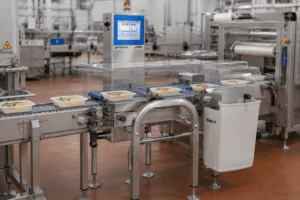
Automated packaging lines can integrate checkweighers, metal detectors, vision systems and date coders within the line, creating a more controlled and auditable process. This reduces the risk of non-conforming product reaching distribution and supports the kind of traceability documentation that retailers and audit bodies increasingly expect.
When automation becomes the right investment
The case for automation is not the same for every manufacturer. The right point to invest in packaging machinery depends on output volumes, product type, pack format, labour costs and growth plans. But there are signals that typically indicate the calculation is shifting.
If the packaging stage regularly limits line throughput, if product consistency is difficult to maintain at current volumes, if giveaway is running higher than it should, or if labour availability is creating planning risk, these are operational indicators that manual packing is no longer the right fit for the scale of the operation.
For manufacturers at this stage, reviewing packaging machinery options alongside production targets, pack formats and integration requirements is the most productive starting point. The goal is not simply to replace people with machines, but to build a packaging stage that supports the output and quality levels the business needs to sustain and grow.
Take the next step with ILPRA UK
Speak to the ILPRA UK team about packaging machinery that fits your product, output targets and production environment.