Technology3 November 2026
How thermoforming packaging works, and what sets pack depth and output
Thermoforming packaging heats a reel of film, forms it into pack cavities, then fills, seals and cuts the packs on one machine. Pack depth is limited by the machine’s maximum forming depth, the film gauge and the draw ratio. Output is cycles per minute multiplied by the number of packs each cycle forms.
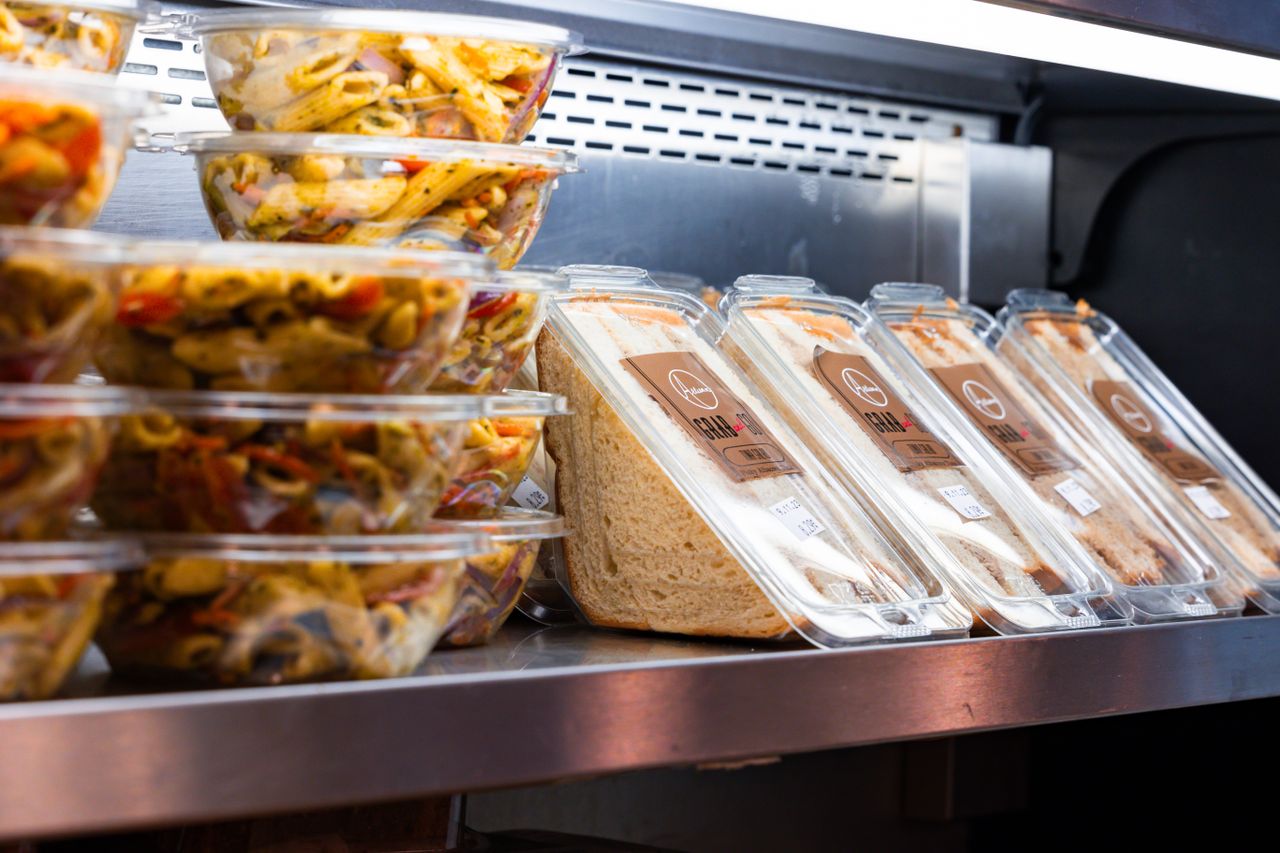
How a thermoformer forms, fills and seals a pack
A thermoforming packaging machine makes the pack as part of its own cycle, with the bottom film indexed forward one step at a time:
- Heating: the bottom film is warmed until it becomes pliable.
- Forming: the softened film is drawn into the mould cavity to create the pack shape.
- Filling: product is loaded by hand or from upstream dosing and loading equipment.
- Sealing: a top film is sealed across the cavity, and the pack atmosphere is set here.
- Cutting: linear and perimetric cuts separate the formed strip into individual packs.
- Discharge: finished packs leave for coding, inspection or secondary packaging.
The step is how far the film advances on each cycle, and it sets the pack length available. On the FormPack Speedyform and FormPack Easyform, ILPRA’s entry-level thermoformers, the maximum step is 300 mm. The VKF50 and VKF70 have a maximum step of 480 mm, and the VKF90 reaches 1100 mm.
All of ILPRA’s thermoforming packaging machines can be configured for sealed, MAP, vacuum and skin packs.
What sets pack depth: forming depth, film gauge and draw ratio
Forming depth
On a thermoformer, the machine sets the upper limit on pack depth. The FormPack Speedyform forms containers up to 100 mm high and the FormPack Easyform up to 120 mm. The VKF50 forms to a maximum depth of 150 mm, while the VKF70 and VKF90 reach 200 mm.
Film gauge
As film is drawn into a cavity it stretches, so the walls and corners of a formed pack end up thinner than the film on the reel. The deeper the pack, the more the starting gauge has to allow for that thinning. On the VKF50 and VKF70, rigid bottom films can be up to 700 µm thick, rising to 1000 µm on the VKF90. Choosing the right rigid thermoforming films matters as much as choosing the machine.
Draw ratio
Draw ratio compares the depth of a cavity with the size of its opening. A deep, narrow cavity asks more of the film than a shallow, wide one, so a high draw ratio needs a film that forms well.
Cycles per minute vs packs per minute
Thermoformer speed is quoted in cycles per minute. The VKF50 and VKF70 run at up to 14 cycles a minute and the VKF90 at up to 28.
Packs per minute is usually higher than cycles per minute, because each cycle forms as many packs as the mould holds. How many cavities fit depends on the pack size, the film width and the step. Forming film is up to 420 mm wide on the FormPack thermoformers and up to 622 mm on the VKF90.
A rated speed is a maximum rather than a line output. Pack depth, pack type, filling speed and film changes all affect how many saleable packs a packaging line produces in a shift, as our article on how packaging machinery impacts production line throughput explains.
Tray sealer output and depth: pre-formed trays and automation level
A tray sealer seals trays made elsewhere, so pack depth is set by the pre-formed tray rather than a forming station.
Output on tray sealing machines depends on the level of automation, the tray format and the application. ILPRA’s FoodPack range runs from semi-automatic to automatic and in-line systems. Fully automated tray sealing lines typically run from tens to several hundred trays per minute, depending on specification.
Thermoformer vs tray sealer at a glance
How the two packaging technologies compare on depth and output:
| Thermoformer (FormPack and VKF) | Tray sealer (FoodPack) | |
|---|---|---|
| Pack source | Formed on the machine from a reel of film | Pre-formed trays bought in and loaded |
| Pack depth | Set by forming depth: 100 mm (Speedyform) to 200 mm (VKF70 and VKF90) |
Set by the pre-formed tray |
| Output basis | Up to 14 cycles a minute (VKF50 and VKF70) or 28 (VKF90) |
Tens to several hundred trays a minute on fully automated lines |
| Format changes | Forming and sealing tooling; tool-free format changes on the VKF range |
Sealing tooling only; quick tooling changes on the FoodPack Speedy |
| MAP, vacuum and skin | Sealed, MAP, vacuum and skin packs; skin with or without an edge on the VKF90 |
MAP, vacuum and skin options depending on the model |
When a tray sealer fits better
A tray sealer is often the better fit when the pack format is fixed by a pre-formed tray, such as one specified by a food retailer or a paper-based tray. ILPRA’s Paper Shape Line forms, lines and prepares paper trays for tray sealing.
Tray sealing also suits lines running many tray formats, because each format needs sealing tooling only. Thermoforming tends to make more sense where pack shape and depth need to be controlled on the line and volumes justify forming tooling.
For a full side-by-side view, read our guide to tray sealing vs thermoforming.
Talk to ILPRA UK about your pack format
Our team can help you match pack depth, output and pack type to your food or non-food product and your packaging line.